Showing posts with label lychee. Show all posts

Friday, June 14, 2013

Time for an Update

First the Wine

I never really got the chance to follow up on the Lychee wine.

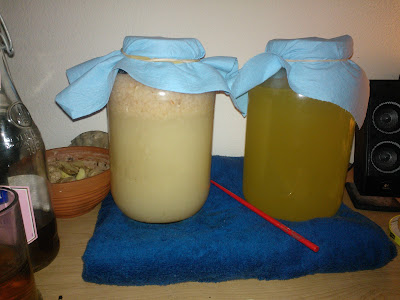
I ended up with two separate gallons of wine.  I used the same recipe for the second one except instead of blending the fruit, I placed it into a mesh bag.  I did this because it was a such a hassle to remove and strain the fruit in the first one after primary.


Here they are together in primary


Wednesday, September 07, 2011

Yearly Reading


After finding a really nice copy of The Lychee and Lungan by George Weidman Groff on the Internet Archive. I feel like I've just read it for the first time. Most copies of this text consist of scanned pages that are then converted into a black and white image, while this version is a color scan of the book and I think that made for a much easier, or rather more natural reading.

Wednesday, April 22, 2009

System 2.0

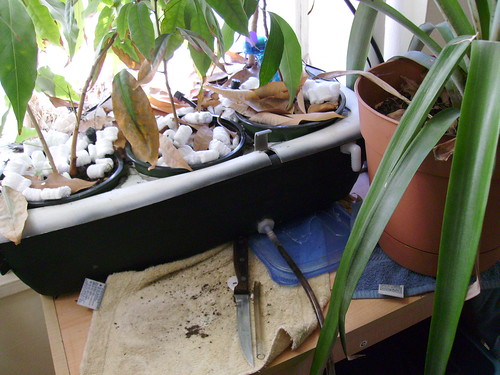
I'm predicting that the lychee will out grow their window this year. Three of them have already begun to send leaves past the top of the light which can't be moved much higher. The solution I've chosen is to build a new system and use both of my windows instead of just one. Here are a few pictures of my current set up before I change it.


In this picture here you can see I've taken a tupperware container and cut holes in the lid to place the pots. The bottom of the container is painted black to block as much light from the rootzone as possible. The top has been painted white to reflect as much light as possible back to the trees as possible. You can also see the tube that is used for both drain and fill. (the plant on the right of the photo my pineapple plant Amy which I grew from fruit purchased from Sam's club)


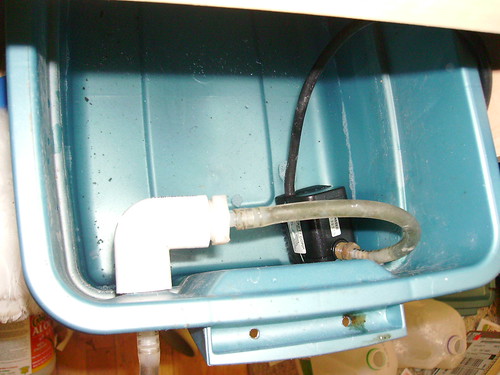
Here you can see the reservoir and the water pump. The water both drains and fills through the pump itself. In the bottom left portion of the photo you can see drain tune which connects to the container housing the trees.


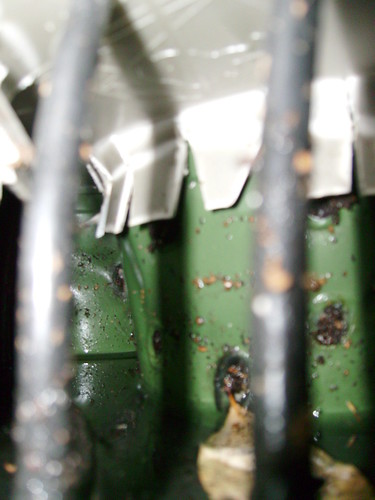
Here is a photo under the lid. If you look closely you can see the bottom of the pots are partially submerged.


Not shown in any of these photos is the light which is a 125W hydrofarm CFL and the timer which is controls the light and pump.

What I liked: This system has held up pretty well for a while now. It was much easier than watering individuals plants. The timer


What I didn't like: water only submerged lower 20% of pots, the plants closer to the window grew much faster than the one on the farther side, forcing me to raise the light, making the problem worse. The pots are made of a soft thin plastic which prevents me from easily removing the trees for cleaning/foliar feeding.

Monday, February 02, 2009

It appears that there are 42 different varieties of Lychee

Take a look here. It appears to be a website of another Chinese lychee amusement park. This one however seem more dedicate to the history of the fruit rather than the growing of it.

Sunday, September 28, 2008

The O'Berry Lychee and Yoga Farm


View Larger Map


Yes, and yoga. Picking season for lychee and longhans from the last week in May until the fruits are gone (usually in July)

Monday, January 14, 2008

Make your own: Canna PK 13/14


Canna PK 13/14

Fast growing plants may need additional Phosphate (P) and Potassium (K). CANNA PK 13/14 stimulates floral development during the blooming phase, providing exuberant flowers and larger yields. Depending on the EC values and the type of growing medium used, this additive contributes to improved bloom and fructification. The form of the nutrients used requires a very small amount of absorption energy. This allows the plant to fully focus on blooming.

NPK Formula: 0-13-14

Lychee are certainly not fast growing. But I still think I'll give this a try.

Two ways to go about this one. First would be draining your reservoir, mixing up a nutrient solution with a NPK ratio of about 2-15-15. Let the plants use this solution for 24 hours, then dump and revert to your original mixture. This is what I would do, but I have lab equipment at hand and can easily determine the correct mixture. For the average gardener, I would mix:

16 grams Epsom salts
10 grams of monopotassium phosphate
5 grams potassium sulfate
1 gallon of hot distilled or reverse osmosis water

Let the mixture sit and cool, and if no cloudiness is present, foliar feed the under-side of the plants leaves. I would not recommend doing this more than once or twice during the plants flowering cycle, as potassium is deadly in very high concentrations.

A recipe for a one part 100% water soluble nutrient mix, using easy to obtain chemicals

Here are a few mixes I found they're not for lychee but I'll be using them as a starting point.

Vegetative mix:
1 US gallon R/O water
Calcium Nitrate - 2.2 grams *
Potassium Nitrate - 0.5 grams
Epsom Salts - 1.2 grams
Monopotassium Phosphate - 0.9 grams
Potassium Sulfate - 1.5 grams
Plantex CSM +B - .3 grams
* 3/4 cup of fresh sterile urine may be substituted

Blooming mix:
1 US Gallon R/O water
Calcium Nitrate - 3.1 grams *
Epsom Salts - 1.7 grams
Monopotassium Phosphate - 1.1 grams
Potassium Sulfate - 2.7 grams
Plantex CSM+B - .3 grams
* 1 cup of fresh sterile urine may be substituted.

How to mix if you aren't using zero or close to zero tds water -
1. Fill 1 gallon container half full.
2. Pre mix all ingredients in a small amount of hot water.
3. Add potassium nitrate and potassium sulfate to the container.
4. Fill container 3/4 full.
5. Add Epsom salts and monopotassium phosphate.
6. Stir well while adding calcium nitrate.
7. Add the Plantex-CSM+B
8. Top off container and pH to 5.8-6.4
9. Add .5 ml Seachem Iron if needed after mixing and pH'ing.
Failure to mix in the proper steps will cause calcium to precipitate out of solution and become unavailable to the plants. Water as close to zero tds as possible is highly recommended.

OR in a A-B parts form

For a 3 part concentrated mix (he did give that info, but I condensed the mixing directions and left it out):

Veg
Part A
1 US gallon R/O water
22 grams Calcium Nitrate *
* - You may not be able to keep 22 grams of calcium nitrate in suspension (depending on water purity). If this is the case, use 11 grams and double the dosage.

Part B
1 US gallon R/O water
Epsom Salts - 17 grams
Monopotassium Phosphate - 11 grams
Potassium Sulfate - 27 grams

Part C (micro)
1 gallon tap (chlorinated) water
30 grams Plantex-CSM+B

Dosage - 12 ounces of each part per gallon of reservoir volume.


Bloom
Part A
1 gallon R/O water
31 grams calcium nitrate *
*-You may not be able to keep 31 grams of calcium nitrate in suspension (depending on water purity). If this is the case, use 15.5 grams and double the dosage.

Part B
1 gallon R/O water
Epsom Salts - 17 grams
Monopotassium Phosphate - 11 grams
Potassium Sulfate - 27 grams

Part C (micro)
1 gallon tap (chlorinated) water
30 grams Plantex-CSM+B


Dosage - 12 ounces of each part per gallon of reservoir volume. These are just simple ratios. If you can double the amount of ingredients per gallon of water, use half as much per dose.
It can also be scaled down, i.e.- 1 quart water and 1/4 the amount of dry fertilizers will still equal a 12 ounce per gallon dose. 1 quart water and 1/2 the listed amount of dry ferts will equal a 6 ounce per gallon dose.

Mixing notes:
Part A
Add calcium nitrate slowly to water while stirring. Often it will help to heat the water. After mixing let the solution settle for 24 hours. If there is any cloudiness or precipitate, cut the solution by 50% with fresh water.

Part B
1. Fill 1 gallon container half full.
2. Pre mix all ingredients in a small amount of hot water.
3. Add potassium nitrate and/or potassium sulfate to the container.
4. Fill container 3/4 full.
5. Add Epsom salts and monopotassium phosphate.
6. Top off to 1 gallon.

Part C
Fill container with 3/4 gallon chlorinated water.
Add Plantex-CSM+B
Mix well
Top off to 1 gallon, again using tap (chlorinated) water.
Store in an opaque bottle, or in a dark place.
If chlorinated water is not used, this must be stored in the refrigerator.

Thanks go out to a nameless University professor from California

Sunday, January 06, 2008

Could coco coir cause harm?


After discovering this article about the possible negative affect of using coco coir. Although I like working with coir, my plants tend to resembles the results of this study. So, I'll be switching to a soil that is about 1/3 Schultz Cactus potting mix and 2/3 peat moss.

PDF from the Utah State University crop physiology laboratory located here.

Friday, December 28, 2007

Lychee Trip 1- Getting a Passport into China


Step One: Locate and go to your local "Passport Acceptance Center"

Step Two: Fill out the appropriate form - In my case it's the DS-11

Step 3: Present the completed form with your 2 pictures. Don't forget the $97 Here for Details


Once you have the passport, you'll next need a visa


Looks like I'll need the Single-Entry L Visa and another 100 bucks.


An important point to remember:

Visa Validity and Duration of Stay

Usually the validity of a Single Entry or Double Entry "L" visa is 90 days or 180 days from the date of issue. This means the holder of the visa shall enter China no later than 90 days or 180 days from the date of issue, otherwise the visa is expired and is null and void. The duration of stay of a "L" visa is 30 days, which means the holder of the visa may stay in China for up to 30 days from the date of entry.The visa officer may extend the Duration of Stay if the applicant needs and requests a stay in China for more than 30 days.

So timing is important as well.


Total cost: Passport $ 97.00
Visa $ 100.00 = 197.00

plus passport photos 7.99 from Rite Aid/Walgreens or Free (maybe)

Tuesday, December 18, 2007

Lichi Trip - Plane Ticket

A mere 1,277 dollars, that's how much a flight to Shenzhen airport from the east cost of America. I've chosen to visit on the last two weeks in May. Whether this is the best time to go, I don't know yet. But the price shouldn't change too much. This ticket is form Asiana Airlines.

Monday, December 10, 2007

Trip 1 - Cont.

So we're on our way to Lichi world, what all are we going to need?

Ingredients:
Passport
5 day hotel stay
Plane Ticket
Meals
Transportation once there
appetite for lychee

Really that's all it takes. Let's see how things work out.

Lychee Trip #1 - Lichi World


Located in the Shenzhen province of China on the western side of lake Xili. This facility is the EPCOT center of lychee production. Here's a Chingrish quote from the site:
With a total planting area of 2,500 mous, the production base is well equipped with a perfect traffic system, communication system, water supply system, electricity supply system, fertilizer supply system as well as a modernized medicine spraying system, in which an over 60-hektare demonstration park is specially outfitted with a state-of-the-art automatic drip irrigation system in the world. Then the agricultural base constructed according to “3 High” standards has been becoming increasingly perfect.
The facility has 60 hectares of "demonstration park" that, if my metric conversions are right is about 148 football fields of lychee trees. That alone is reason enough to go. Here's the site.